
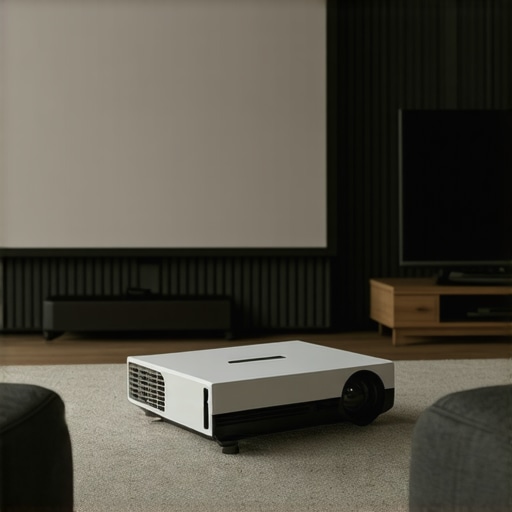
My Journey to the Perfect Home Theater Setup
As someone who loves immersing myself in movies and gaming, I always dreamed of creating a home theater that rivals a cinema. A few months ago, I faced a familiar dilemma: should I go for a big-screen TV or opt for a projector? My personal journey into understanding the differences between projector and TV has been eye-opening, and I hope sharing my experience helps you decide too.
Why I Was Tempted by the Big Screen
Initially, I was drawn to large-screen TVs, especially after seeing some high-end models that offer stunning 4K visuals. The convenience of a built-in smart platform and vibrant colors made TVs seem like the obvious choice. But as I started researching, I realized that projectors could offer an even bigger, more cinematic experience—sometimes at a fraction of the cost. This led me to dig deeper into the pros and cons of each display type.
Understanding the Cost and Performance Balance
One of the most significant factors for me was budget. I found that high-quality projectors can deliver a massive 100-inch or larger display for under $1,000, whereas large 75-inch or 85-inch TVs could cost upwards of $2,000 to $3,000. I explored a detailed cost comparison of projector and TV, which helped me see that projectors often provide more screen size for less money—if you’re willing to accept some compromises in brightness and setup complexity.
My Experience with Ambient Light and Room Setup
One thing I learned early on is that projectors perform best in controlled lighting environments. I tested my space with adjustable curtains and dimmable lights, which made a remarkable difference. For daytime viewing, a high-lumen projector is necessary, and I found that some models now offer more than 3,000 lumens, making them usable even in brighter rooms. It was a bit of a learning curve, but managing ambient light became part of my home theater ritual. For an overview of how ambient light affects viewing, check out this article: managing ambient light for perfect viewing.
How Do I Feel About Image Quality?
Projectors have come a long way. With 4K resolution and HDR support, modern models can produce stunning images that rival high-end TVs. However, they require a dedicated setup, including a quality screen and proper positioning. My personal favorite is the flexibility I get with a projector—being able to resize the image and even project onto unusual surfaces adds a creative touch to my space.
Would a TV or Projector Suit My Lifestyle More?
This question made me reflect on my habits. If you value simplicity and minimal setup, a TV might be better. But if you love customizing your viewing environment, experimenting with different screen sizes, or creating a true cinematic experience, a projector is worth considering. I also read that some homeowners combine both, using a TV for everyday viewing and a projector for special movie nights. For more insights on which display option fits your needs, visit our ultimate guide to home theater display options.
If you’re still undecided, I recommend trying out both options if possible. Visiting a local electronics store or renting equipment for a test run can make a big difference in your decision-making process. I’d love to hear about your experiences—feel free to share your thoughts in the comments or ask any questions!
The Art of Balancing Brightness and Room Environment
While projectors have made significant strides in brightness and image quality, optimizing your room’s lighting remains crucial. Even the best projector can struggle in a bright environment. Investing in blackout curtains or adjustable lighting can dramatically improve contrast and color accuracy. Additionally, selecting a high-lumen projector—ideally over 3,000 lumens—can make daytime viewing more feasible. For those considering a dedicated home theater, understanding how ambient light impacts image quality is vital. Check out this comprehensive article on managing ambient light for perfect viewing to fine-tune your setup.
The Role of Screen Technology in Image Fidelity
Choosing the right screen surface can elevate your projector’s performance. Matte screens reduce glare and enhance contrast, but some enthusiasts opt for high-gain screens to boost brightness, especially in less controlled lighting environments. Conversely, ambient light rejecting (ALR) screens are designed to minimize ambient light interference, providing brighter images without sacrificing contrast. The investment in quality screen technology can significantly narrow the gap between projector and TV picture quality, especially with HDR content. For a detailed comparison of display options, visit our ultimate guide to home theater display options.
Creative Ways to Incorporate Both Projector and TV
Many home theater enthusiasts find value in utilizing both a projector and a TV. For everyday activities like streaming news or casual viewing, a TV offers convenience and quick access. Meanwhile, a projector can be reserved for movie nights and gaming, providing a larger, more immersive experience. This dual setup maximizes versatility and caters to different viewing preferences. When integrating both, consider the placement and wiring to minimize clutter and ensure seamless switching between displays. To explore different configurations, visit our cost comparison of projector and TV.
What Are the Hidden Practicalities of Choosing Between Projector and TV?
Beyond the obvious factors like size and cost, several nuanced considerations influence the decision. For instance, the maintenance of projectors—such as bulb replacements or filter cleanings—can add to long-term costs and effort. Conversely, TVs are generally more durable with less upkeep but might lack the immersive scale of a projector. Additionally, the placement flexibility of projectors allows for unique installations, but requires space for throw distance and proper mounting. Considering your lifestyle, room layout, and future plans can help determine the best fit. For personalized advice, reach out through our contact page.
If you’re eager to enhance your home theater, experimenting with both options or consulting with a professional can provide clarity. Share your thoughts or questions below—we love helping fellow enthusiasts craft their perfect setup!
Reflections on the Nuances of Room Acoustics and Visual Harmony
As I delved deeper into perfecting my home theater setup, I realized that the interplay between visual display and room acoustics is far more intricate than I initially thought. For instance, I discovered that the choice of screen material and projector placement can significantly influence not just image quality, but also the overall ambiance of the space. An ambient light rejecting (ALR) screen, for example, can dramatically improve contrast in a relatively bright room, but its effectiveness hinges on precise installation and room design. I found that integrating soundproofing and acoustic treatments subtly transforms the auditory experience, making it more immersive and reducing external noise interference. This level of customization, while demanding, pays off in creating a truly cinematic environment that pleases both the eyes and ears.
How Do Advanced Screen Technologies Impact My Viewing Experience?
Exploring beyond basic matte surfaces, I became fascinated by newer screen technologies like ambient light rejecting (ALR) and high-gain surfaces. These innovations can elevate a projector’s performance, especially in rooms where controlling ambient light is challenging. For instance, ALR screens are engineered to reflect projector light directly back to the viewer, minimizing the impact of stray light and enhancing HDR content’s vibrancy. During my experiments, I noticed that investing in a quality screen made a noticeable difference—images became sharper, colors more vivid, and contrast more nuanced. This made me appreciate that the right screen isn’t just a surface; it’s an integral part of the system that can bridge the gap between projector and high-end TV quality.
When Should I Consider Upgrading or Expanding My Display Setup?
One question I often pondered was whether to upgrade my projector, add a secondary display, or even integrate a large TV for casual viewing. The answer, I found, depends on evolving needs and space constraints. For instance, if I wanted to enjoy quick news updates or sports highlights, a sleek 55-inch TV on a side wall offers convenience without sacrificing much space. Conversely, for dedicated movie nights, my projector’s expansive display creates an immersive experience I can’t replicate on a smaller screen. This dual approach ensures flexibility, but it also raises practical questions about wiring, room layout, and content management. To explore these options further, I recommend reading about the latest trends in multi-display setups on our comprehensive guide to display options.
What Are the Hidden Costs and Maintenance Challenges I Didn’t Expect?
While I was captivated by the idea of a massive projection screen, I underestimated the ongoing maintenance involved. Replacing projector bulbs, cleaning filters, and recalibrating alignment are part of the routine I’ve come to accept. These costs can add up over time, especially with higher-lumen models designed for brighter rooms. On the flip side, a high-quality TV demands less upkeep but might be less versatile in size and placement. This dichotomy made me realize that a truly satisfying setup balances initial investment with long-term durability. For anyone contemplating a home theater, I suggest factoring in these maintenance considerations and planning accordingly. For detailed insights, check out our article on choosing the right screen size and maintenance tips.
How Can I Optimize My Room’s Lighting and Environment for Both Projector and TV?
Achieving the perfect balance between ambient light and display quality remains a challenge. I experimented with blackout curtains, dimmable LEDs, and even strategic furniture placement to control reflections and glare. One trick that worked well was installing adjustable lighting fixtures that could shift from bright to dim in seconds, creating the ideal mood for different content types. Additionally, I learned that the placement of speakers and furniture influences not just sound quality but also the perceived image sharpness. Creating a harmonious environment means viewing comfort and visual clarity go hand in hand. For more detailed strategies, I recommend exploring our guide on managing ambient light for optimal viewing.
What Personal Insights Would I Share About Balancing Practicality and Dreaming Big?
Ultimately, my journey has been about balancing dreams of cinematic grandeur with practical realities. I’ve learned that sometimes, less is more—prioritizing quality over sheer size, and comfort over complexity. The thrill of setting up a projector in a dedicated space is unmatched, but ensuring that setup is sustainable and enjoyable requires patience, experimentation, and sometimes, compromise. I encourage fellow enthusiasts to view their home theater as an evolving project—adding, upgrading, and refining over time. Sharing our experiences, whether through comments or community forums, enriches this journey. If you’re contemplating your own setup, I invite you to explore our contact page for personalized advice or to share your insights. Remember, the perfect home theater is as much about the process as it is about the final result.
The Subtle Art of Acoustic Optimization for Visual Fidelity
As I delved further into perfecting my home theater, it became increasingly apparent that sound and vision are intrinsically linked in creating an immersive experience. Achieving pristine visual quality is only part of the equation; the room’s acoustics play a pivotal role in complementing the visual display and enhancing overall enjoyment. I invested considerable time in experimenting with acoustic treatments, such as bass traps, diffusers, and specialized panels, which significantly reduced echo and sound distortion, allowing dialogue and effects to resonate with clarity and depth. For example, I installed broadband absorbers behind my seating area, which noticeably improved speech intelligibility, especially during intense scenes. This journey into acoustic refinement revealed that a well-balanced sound environment is essential to truly appreciating the capabilities of high-end projectors and screens.
How Advanced Screen Technologies Revolutionize Home Viewing
Exploring beyond basic matte surfaces, I became captivated by innovations like ambient light rejecting (ALR) screens and high-gain surfaces. These technologies are game-changers, particularly in environments where controlling ambient light is challenging. ALR screens, for instance, utilize micro-structured surfaces to reflect projector light directly back to the viewer, drastically improving contrast and color vibrancy even in moderately lit rooms. My own experience with such screens demonstrated a marked difference: images became noticeably sharper, with deeper blacks and more vivid HDR content, aligning closely with the reports from industry experts like those at Projector Central. Investing in quality screen technology, therefore, is often the best way to bridge the gap between projector and high-end TV performance, especially when room constraints limit lighting control.
Is It Time to Rethink Your Display Strategy for Future Flexibility?
One question I frequently ask myself is whether my setup should evolve to incorporate multiple display options, such as a dedicated projector complemented by a sleek smart TV. This dual approach offers unparalleled flexibility—using the projector for cinematic nights and the TV for quick news updates or casual streaming. It’s a strategy that maximizes the strengths of both technologies, but it also introduces complexity in wiring, placement, and content management. As I researched, I found that integrating these displays seamlessly can be achieved through smart home automation systems, allowing effortless switching with minimal clutter. For those interested in expanding their home theater’s capabilities, I recommend exploring the latest trends outlined in our comprehensive guide on display options. Experimenting with different configurations, even temporarily, can provide invaluable insights into what truly enhances your viewing pleasure.
How Do I Balance Long-Term Maintenance with Immediate Performance Gains?
One often overlooked aspect of home theater planning is the ongoing maintenance and cost considerations. While projectors offer the allure of massive screens and cinematic immersion, they require periodic bulb replacements, filter cleanings, and precise alignment, which can be both time-consuming and costly. Conversely, high-quality TVs demand less upkeep and tend to be more resilient over time. My approach has been to weigh these factors carefully, opting for a mid-range projector with a durable lamp and a high-performing TV that complements my space. This balanced setup allows me to enjoy both immersive experiences and hassle-free everyday use. For detailed insights into optimizing your investment, I recommend reviewing our guide on choosing the right screen size and maintenance tips. Long-term satisfaction hinges on anticipating these practicalities, which ultimately shape the longevity of your home theater system.
What Role Does Room Lighting Play in Achieving Cinematic Excellence?
Controlling ambient light remains a cornerstone of my home theater strategy. I experimented extensively with blackout curtains, dimmable LEDs, and strategic furniture placement, all aimed at minimizing glare and reflections. An unexpected breakthrough was installing adjustable lighting fixtures that could shift from bright to dim with a simple command—transforming the environment instantly to suit different content types. This flexibility allowed me to enjoy vibrant HDR movies during the evening and maintain a comfortable ambiance for daytime viewing. The interplay of room lighting and display technology is complex but crucial; it can make or break the perceived quality of images. For a comprehensive understanding and practical tips, I recommend reading our detailed article on managing ambient light for optimal viewing. Achieving harmony between light and display not only elevates visual fidelity but also enhances the overall sensory experience.
Engage with My Expertise and Share Your Home Theater Aspirations
My ongoing journey has shown me that creating a truly immersive home theater is as much about personal experimentation as it is about technical mastery. If you’re contemplating similar upgrades or seeking tailored advice, I invite you to connect through our contact page. Sharing insights and learning from others’ experiences enriches this passionate pursuit, and I’m eager to hear about your own setups and challenges. Remember, the perfect home theater isn’t a static achievement but an evolving project—one that rewards patience, curiosity, and a willingness to explore innovative solutions. Let’s continue this conversation and elevate our viewing experiences together!
Things I Wish I Knew Earlier (or You Might Find Surprising)
The Hidden Power of Room Acoustics
One of the most overlooked aspects of home theater setup is acoustic treatment. Early on, I underestimated how much soundproofing and room ambiance could influence the overall experience. Installing simple bass traps and diffusers transformed my space, making dialogue crisper and effects more immersive—something I wish I had prioritized from the start.
The Real Impact of Screen Technology
Initially, I thought that only the projector’s resolution mattered, but I discovered that the type of screen surface—matte, high-gain, or ambient light rejecting—can dramatically affect image quality. Upgrading to an ALR screen was a game-changer, especially in my less-controlled lighting environment, elevating my viewing to near-cinematic levels.
Ambient Light Control Is Crucial
Managing ambient light isn’t just about blackout curtains; it’s about creating a flexible environment. I found that dimmable lights and strategic furniture placement let me enjoy daylight viewing without sacrificing contrast or color vibrancy, a tip I wish I had known earlier.
Dual Display Strategies Offer Flexibility
Using both a projector and a TV has allowed me to personalize my space. The projector is perfect for movie nights, while the TV is quick and convenient for casual streaming or news. Balancing these two setups requires some planning but pays off in versatility.
Long-term Maintenance Matters More Than You Think
Replacing projector bulbs and cleaning filters might seem minor initially, but the cumulative costs and effort can be surprising. Choosing durable equipment and planning for upkeep has saved me headaches and kept my system performing at its best.
Personal Reflection
Looking back, I realize that building a home theater is as much about patience and experimentation as it is about initial investment. Each adjustment—whether in lighting, acoustics, or display—brings me closer to the cinematic experience I envisioned. If you’re embarking on a similar journey, remember that every tweak adds to the joy of creating your perfect space. For more insights, I recommend exploring trusted sources like Projector Central or CNET’s home theater section, which have helped me immensely. If this resonates with you, I’d love to hear your own tips and stories—share them in the comments or reach out through our contact page. Remember, the journey to audiovisual excellence is ongoing, and every small step makes a big difference.
Reading through this detailed journey was really insightful. I’ve personally been debating for a while whether to invest in a high-end TV or try a projector setup, especially considering space constraints and ambient lighting. Your point about managing room lighting and choosing the right screen technology hit home—I’ve found that blackout curtains can dramatically improve image quality in a room that isn’t ideally dark. I’ve also noticed that the type of screen surface, like ALR or high-gain, can make a noticeable difference in whether a projector can truly rival a TV for everyday use. It’s interesting how your experience shows that combining both can offer a perfect balance—something I’ve considered as well, but was unsure how to implement seamlessly. Do you think that with emerging ultra-bright projectors today, the need for complete lighting control is diminishing? I’d love to hear more about how you manage day-to-day balance between convenience and cinematic quality in your setup.
This thorough overview really resonates with my own experience of designing a home theater. I’ve been leaning toward a projector for larger-scale viewing but was concerned about ambient light issues, especially during daytime. Your mention of high-lumen projectors over 3000 lumens helps clarify that brighter models are increasingly viable even in less-controlled rooms. I also agree about the importance of high-quality screens like ALR to minimize ambient light interference—it’s an investment that truly pays off. From my research, it seems that with the advancements in projector brightness and screen technology, the need for absolute darkness is decreasing, which is encouraging for those of us dealing with variable lighting conditions. I wonder, though, how others are managing the balance between convenience and image fidelity, especially with multi-purpose rooms. Does anyone have tips for maintaining high picture quality while keeping setup simple for everyday use? It seems that hybrid setups might offer the best of both worlds, but integrating them seamlessly remains a challenge.
Reading your detailed journey really highlights how important room environment and display technology are in creating an optimal home theater experience. I totally agree that managing ambient light is crucial; I’ve installed blackout curtains and dimmable LEDs in my space to improve picture quality. What’s also interesting is how advances in high-lumen projectors are making daytime viewing a lot more feasible. I’ve been considering a projector with over 3,000 lumens myself, especially for a multi-purpose room. Do you think that with the newer ultra-bright models, the necessity for perfect lighting control will decrease further? Or is it still best to aim for a controlled environment to get the most out of high-end screens? I’d love to hear how others are balancing convenience and visual fidelity in their setups. Sometimes, I feel that hybrid approaches—combining a projector for movies and a TV for quick streams—offer the best flexibility. Curious about your thoughts on that.