
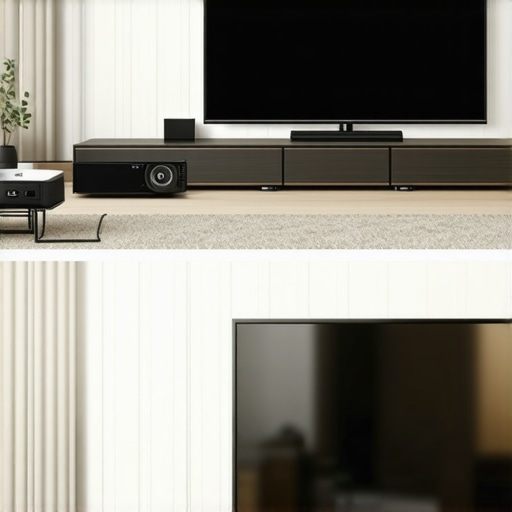
My First Encounter with Home Theater Dilemmas
Not long ago, I found myself torn between investing in a sleek new TV or a high-quality projector for my living room. The decision wasn’t just about size or price; it was about creating an immersive experience that would rival the cinema. As someone passionate about home entertainment, I decided to dive deep into the world of projectors and TVs, and I want to share what I’ve learned along the way.
Understanding Cost Differences and Screen Size Magic
One of the first things I discovered was the significant difference in cost and screen size potential. Traditional TVs tend to be more affordable upfront, but they have limitations in size, especially within a reasonable budget. Projectors, on the other hand, can deliver massive screens for a fraction of the cost of a large flat-screen TV, making them perfect for true home theater enthusiasts. I found a detailed comparison at this resource which clarified many of my doubts about cost-effectiveness.
My Personal Experience with Screen Sizes and Viewing Comfort
Choosing the right screen size was a personal journey. I wanted a cinematic feel, but without overwhelming my space. After reading this guide, I realized that projectors could offer a flexible size range, often exceeding what TVs can provide without breaking the bank. In my setup, I opted for a 120-inch screen, which transformed my living room into a true home theater.
What Makes a Projector or TV the Best Choice for Ambient Light?
Can Ambient Light Conditions Really Make a Difference?
This was a question I pondered deeply. Ambient light can drastically affect picture quality, especially with projectors, which need darker environments for optimal viewing. I learned from authoritative sources that TVs are generally better suited for rooms with lots of natural light. My living room, with its large windows, leaned me towards a high-end smart TV. However, for dedicated dark rooms, projectors shine brighter, offering cinema-like quality.
If you’re considering your setup, think about your room’s ambient conditions and how much light control you have. I ended up balancing both worlds by adding blackout curtains, which significantly improved my projector experience.
Final Thoughts: Which One Is Right for You?
Deciding between a projector and a TV ultimately depends on your space, budget, and viewing preferences. If you crave a giant screen and have a controlled environment, a projector might be the way to go. If convenience and bright rooms are your priority, a high-quality TV could serve you better. I recommend exploring this comparative analysis for more insights.
Feeling inspired to upgrade your home theater? I’d love to hear your experiences or questions—drop a comment below or visit our contact page for personalized advice!
How Do You Maximize Picture Quality in Varying Ambient Light Conditions?
One often overlooked aspect in choosing between projectors and TVs is the impact of ambient light on picture quality. As I explored deeper, I discovered that managing lighting effectively can transform your viewing experience. For instance, in rooms with large windows or lots of natural light, high-brightness TVs with anti-reflective coatings tend to perform better, ensuring vibrant visuals without extensive room modifications. Conversely, dedicated home theaters with controlled lighting environments benefit from projectors, which can deliver cinema-quality images in darkness or dim settings. To make an informed decision, consider your room’s natural lighting and how you plan to control it. For more detailed strategies, I recommend reviewing this comprehensive guide.
What Are the Practical Implications of Screen Size Versus Cost?
Screen size is a critical factor in creating an immersive home theater. While projectors can often produce screens exceeding 150 inches at a fraction of the cost of similarly sized TVs, the practical implications involve room size and installation complexity. Larger screens demand more space and specific mounting considerations, especially for ceiling-mounted projectors. Additionally, higher-end projectors with 4K resolution and HDR capabilities tend to be more costly, though they still often come out ahead in the cost-per-inch comparison. If you’re contemplating a setup, I suggest exploring this analysis to understand the nuanced trade-offs between size, cost, and installation effort.
Is Your Room Suiting the Brightness and Contrast Demands of High-End Projectors?
High-end projectors with excellent contrast ratios and brightness levels can be game-changers, but only if your room supports their optimal performance. Brightness, measured in lumens, is vital in rooms with ambient light, ensuring images remain vivid and detailed. Contrast ratios further enhance depth and realism, making images pop. An important consideration is whether your room can be sufficiently darkened or if you need specialized screens that reflect light efficiently. As highlighted by industry experts, selecting a projector that balances lumen output with your room’s lighting conditions is essential for a satisfying experience. For a detailed comparison of projector specifications, visit this resource.
Are You Considering Future-Proofing Your Home Theater Setup?
In the rapidly evolving world of display technology, future-proofing your investment is a smart move. Whether opting for a projector or a TV, consider models that support the latest resolutions like 4K or even 8K, along with HDR and smart features. Additionally, connectivity options such as HDMI 2.1 and wireless streaming capabilities ensure your setup remains relevant for years to come. As technology advances, so do your options for integrating voice control, streaming services, and even gaming enhancements. To help you make a forward-looking choice, explore this ultimate guide that covers the latest trends and features in home theater displays.
Thinking about expanding your knowledge or sharing your experiences? Join the conversation by commenting below or explore more in-depth articles on our contact page. Your perfect home theater setup is just a decision away!
Unveiling the Subtle Art of Display Selection in My Personal Journey
As I continued refining my home theater setup, I realized that the nuances of choosing between a projector and a TV go far beyond basic specifications. It’s about understanding the intricate dance between room design, lighting conditions, and even my own viewing habits. For instance, I learned that in rooms with high ceilings and large windows, the glare and ambient light could make or break the visual experience, pushing me to consider high-brightness TVs with anti-reflective coatings. On the flip side, in my dedicated dark room, the richness of a high-end projector with HDR support truly shined, offering a depth of contrast that’s hard to match.
Exploring further, I discovered that the technology behind projectors, especially laser vs. lamp-based models, affects longevity, maintenance, and overall image quality. Laser projectors, while more expensive initially, promise years of consistent brightness and color accuracy, which appealed to my long-term planning. Balancing this with the cost and complexity of installation, I pondered whether the immersive size of a 150-inch screen justified the setup effort and expense.
In my quest for clarity, I stumbled upon industry insights like those in this comprehensive comparison, which highlighted the importance of future-proof features such as 4K resolution, HDR, and HDMI 2.1 compatibility. These features ensure that my investment remains relevant amid rapid technological advances, making me more confident in my choices.
But beyond the technical specs, I’ve come to appreciate a more philosophical aspect: the emotional connection with my viewing environment. For me, the perfect setup isn’t just about image quality or size; it’s about creating a space that invites relaxation, sparks joy, and sparks conversations. Whether it’s the thrill of a blockbuster movie or the quiet comfort of a late-night show, I want my home theater to be a sanctuary.
If you’re contemplating a similar journey, I invite you to share your experiences or ask questions. Your insights might help others navigate this complex yet rewarding decision-making process. Drop a comment below or visit our contact page for a personalized chat.
Mastering Ambient Light Management for Ultimate Visual Delight
One realization that profoundly impacted my setup was how ambient light influences perceived picture quality. It’s not merely about choosing between a projector or a TV but about tailoring your environment to suit your display’s strengths. I found that in rooms with natural light, high-brightness TVs with matte screens and anti-reflective coatings provided vibrant, glare-free images, making them more practical without extensive room modifications. Conversely, in my darkened home theater, the subtle nuances of contrast and shadow details from a quality projector truly excelled, immersing me in cinematic realism.
To optimize this balance, I installed blackout curtains and used dimmable lighting, which allowed me to switch seamlessly between different viewing atmospheres. This flexibility is crucial because, as I discovered from this detailed guide, the best display is one that adapts to your environment rather than forcing you to adapt your environment to your display.
Another aspect I’ve explored is the use of ambient light rejecting screens with projectors, which can significantly improve picture clarity in less-than-ideal lighting conditions. It’s a fascinating technology that bridges the gap between convenience and performance, especially for those who can’t fully control their room’s lighting. Integrating these solutions has transformed my viewing experience into something truly cinematic, regardless of the time of day or external conditions.
Perhaps the most valuable lesson I’ve learned is that thoughtful lighting control amplifies the impact of your display choice, making even a modest projector or a mid-range TV feel extraordinary. If you’re interested in exploring these strategies, I recommend delving into this expert resource for practical advice tailored to different room types and lighting scenarios.
Engaging with Your Home Theater Aspirations
Reflecting on my own journey, I realize that the decision between projector and TV is deeply personal and context-dependent. It’s about aligning your technical needs with your lifestyle, space constraints, and aesthetic preferences. As technology continues to evolve, so do the possibilities for creating a truly customized entertainment oasis.
What’s your story? Have you faced similar dilemmas or discovered unexpected solutions? Sharing your insights can inspire others to navigate their own home theater adventures with confidence and enthusiasm. Feel free to comment below or reach out via our contact page. Your experience might just be the catalyst someone else needs to take the next step in their entertainment journey.
Refining the Art of Display Selection Amid Evolving Technology
As I delved deeper into the realm of home theater customization, I recognized that selecting between a projector and a TV transcends basic specifications, venturing into the nuanced territory of technological evolution and personalized environment optimization. The advent of OLED and microLED displays, for example, has significantly shifted the landscape, offering unprecedented contrast ratios and color accuracies that challenge traditional distinctions. Exploring this comprehensive comparison illuminated how future-proofing involves embracing these cutting-edge technologies while maintaining compatibility with emerging standards like HDMI 2.1 and Dolby Vision. My experience teaches that integrating such features can secure your investment against rapid obsolescence, ensuring your setup remains at the forefront of innovation.
Balancing Ambient Light Management with Technological Sophistication
Mastering ambient light considerations is an ongoing journey, especially as display technologies evolve. I found that high-brightness OLEDs and anti-reflective coatings on premium TVs now offer remarkable resilience against ambient glare, which was previously a significant hurdle. Conversely, laser projectors equipped with ambient light rejecting screens have become increasingly sophisticated, enabling stunning images even in less controlled environments. Implementing layered lighting strategies with dimmable, color-adjustable LEDs enhances this versatility, creating a dynamic viewing atmosphere that adapts seamlessly to content type and time of day. For those interested in pushing the boundaries of ambient light management, I recommend reviewing this detailed guide, which offers actionable insights into optimizing your environment for maximum visual fidelity.
Is Your Room Design Supporting High-End Display Technologies?
Room architecture plays a crucial role in realizing the full potential of advanced displays. In my experience, high ceilings and large windows demand tailored solutions—such as specialized blackout systems and reflective surfaces—to mitigate glare and enhance contrast. Implementing acoustic treatments not only improves sound but also complements visual clarity by reducing unwanted reflections. The integration of motorized shades and smart lighting controls can transform a standard space into a cinematic sanctuary, elevating the viewing experience to new heights. Exploring this ultimate guide proved invaluable in aligning my room’s design with my high-performance display goals, ensuring that every technological upgrade synergizes with the environment.
How Can I Harmonize Technological Innovation with Emotional Connection?
Beyond technical specs, cultivating an emotional resonance with your home theater space is essential. I’ve learned that personalization—be it through ambient lighting that reflects my mood or custom audio setups—creates a sanctuary that feels uniquely mine. The convergence of innovative technology with thoughtful design fosters a space where entertainment becomes an immersive, emotional experience. Engaging with fellow enthusiasts through communities or expert consultations can provide fresh perspectives and inspire creative integrations. I encourage you to share your journey or ask questions—your insights could spark a transformative idea for someone else. Visit our contact page for personalized advice or to connect with like-minded aficionados.
Future-Proofing Your Home Theater: A Strategic Perspective
Investing in future-proof solutions is increasingly vital as technology accelerates. Supporting the latest resolutions, high dynamic range standards, and connectivity options like HDMI 2.1 ensures longevity. I’ve found that selecting versatile components, such as modular AV receivers and upgrade-friendly projectors, allows for incremental enhancements without complete overhauls. Incorporating smart home integration and voice control adds another layer of convenience, aligning your setup with the latest IoT advancements. For a detailed roadmap, I recommend exploring this comprehensive guide, which covers strategic planning for a resilient, adaptable home theater ecosystem.
Things I Wish I Knew Earlier (or You Might Find Surprising)
The Hidden Power of Room Design
When I first started my home theater journey, I underestimated how much room layout and lighting could influence my choice between a projector and a TV. It wasn’t until I experimented with different setups that I realized that even the best projector can be hampered by ambient light and cluttered spaces. Creating a dedicated dark room transformed my experience, making the projector’s cinematic quality truly shine.
The Myth of Size without Space
I used to think bigger always meant better. Not quite! I learned that screen size needs to be balanced with room dimensions and seating arrangements. A 150-inch screen in a small living room can be overwhelming, but in a spacious dedicated theater, it becomes a breathtaking focal point. Finding that sweet spot is more art than science.
Brightness Matters More Than You Think
Initially, I believed that high brightness was only necessary for bright rooms. Turns out, it’s crucial for any environment with natural light. Modern high-brightness TVs with anti-reflective coatings perform remarkably well in daylight, but for dark rooms, projectors with ambient light rejecting screens can deliver deeper contrast and richer colors.
Investment in Future Tech Pays Off
Thinking ahead about future-proofing my setup, I discovered that supporting features like 4K, HDR, and HDMI 2.1 in my devices ensures my home theater remains relevant as technology evolves. It’s worth investing a bit more now to enjoy seamless upgrades later.
The Emotional Side of Home Theater Choices
Beyond specs and size, I found that creating a cozy, personalized space makes a huge difference. Whether it’s ambient lighting matching my mood or a comfy chair arrangement, these touches turn a technical setup into a sanctuary where entertainment feels truly special.
Resources I’ve Come to Trust Over Time- Ultimate Home Displays Guide: This comprehensive resource helped me understand the nuances of room lighting and display technology, making complex decisions much simpler.
- HDR Explained (HDR10+ & Dolby Vision): For understanding how high dynamic range can elevate your viewing experience, this site offers clear, detailed insights.
- Latest Home Theater Tech Trends: Staying updated with industry trends helped me choose future-proof components that won’t quickly become outdated.
Parting Thoughts from My Perspective
Deciding between a projector and a TV for your home theater setup is a deeply personal journey that depends on your space, lighting, and entertainment preferences. From my experience, understanding how ambient light impacts picture quality and balancing size with room capacity are key factors. I’ve learned that quality equipment combined with thoughtful room design can transform your viewing experience into something truly immersive and emotionally fulfilling. If this resonates with you, I’d love to hear your thoughts or experiences—feel free to share in the comments or reach out via our contact page. Your story might inspire someone else to take the next step toward their perfect home theater.”},