
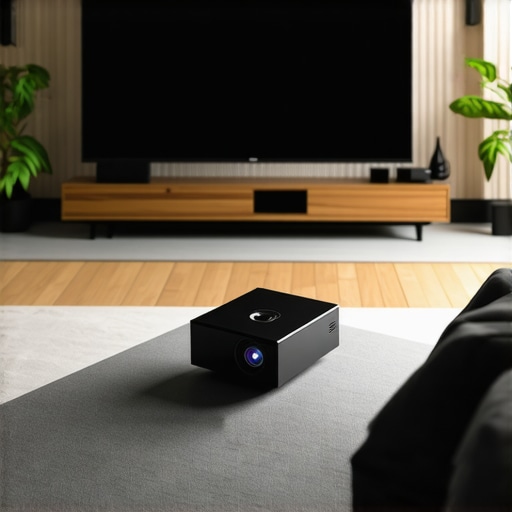
My Journey into Home Theater Choices: Projector or TV?
When I first decided to upgrade my home entertainment setup, I was overwhelmed by the options available. I vividly remember standing in my living room, contemplating whether to opt for a sleek 75-inch TV or invest in a projector for a more cinematic experience. As someone who loves movies and gaming, I knew that the right choice would depend heavily on factors like budget, room size, and ambient lighting. My personal experience taught me that choosing between a projector and a TV isn’t just about the initial cost but also about long-term satisfaction and viewing quality.
Understanding Screen Size and Cost: My Personal Perspective
One thing I quickly learned was that projectors can offer incredible screen sizes without breaking the bank—if you consider the cost-effectiveness over time. According to an external source I came across, the cost per inch for projectors tends to decrease as screen size increases, making them a smart investment for larger displays (source). However, I also found that high-quality TVs, especially 4K models, can be more cost-efficient upfront, especially in well-lit rooms where projectors struggle.
My Personal Experience with Ambient Light and Display Choice
Ambient light was a significant factor for me. Living in a bright, open-plan space meant that a projector’s performance was limited unless I invested in special screens or controlled lighting, which added to the overall cost. I experimented with managing ambient light and discovered that TVs tend to perform better in bright environments, while projectors shine in darker rooms (source). This balance between cost, space, and light conditions is crucial when selecting the ideal home theater display.
What About Screen Size and Budget in 2025?
Looking ahead, I’ve noticed that the trend for 2025 indicates projectors will continue to offer larger screens at lower costs compared to TVs. If you’re aiming for that immersive experience with a massive display, a projector might be the way to go—especially with advancements in 4K and 8K projector technology. But if your room size is limited or you prefer a straightforward setup, a high-end TV could be more practical and cost-effective (source).
Deep Dive: How Do I Decide What’s Best for My Home?
Are there specific factors that should influence my decision between projector and TV?
Absolutely. Besides cost and size, your room layout, lighting, and personal viewing habits matter a lot. For example, I found that if I wanted a true cinematic experience, a projector with a dedicated dark room was ideal. However, for quick TV shows or gaming in a bright room, a quality TV was more convenient. Reviewing my experience, I’d recommend considering a hybrid approach—using a projector for movie nights and a TV for everyday viewing.
If you’re still unsure, I highly suggest exploring more detailed guides or consulting with experts. You can check out this comprehensive guide for an in-depth comparison.
Would you like to share your own home theater experiences? Feel free to leave a comment below or reach out through our contact page. Your insights can help others make smarter choices!
Balancing Picture Quality and Ambient Light: An Expert’s Perspective
One of the most nuanced aspects when selecting your home theater display is managing ambient light to optimize picture quality. While projectors are renowned for their large screens and cinematic feel, they can struggle in well-lit environments. Modern projector technology, however, has made significant strides—especially with laser projectors and high-gain screens—that mitigate ambient light issues (source). Conversely, high-end TVs with anti-reflective coatings and high brightness levels excel in bright rooms, making them versatile for everyday use.
How do advancements in projector technology influence your long-term home theater plans?
Recent innovations, such as 4K and 8K resolution projectors, combined with improved contrast ratios, are making projectors increasingly comparable to, or even surpassing, traditional TVs in image fidelity. For instance, laser projectors now offer vibrant colors and deep blacks, challenging the dominance of OLED TVs. This progress suggests that investing in a high-quality projector could future-proof your setup, especially if you prioritize large-scale displays. However, this often comes with higher initial costs and a more complex installation process (source), which must be weighed against the simplicity and convenience of a TV.
Assessing Room Size and Viewing Distance for Optimal Experience
Another critical factor is the room size and the typical viewing distance. Larger screens are more immersive but require ample space. Projectors excel here, offering flexibility in screen size that can range from 100 inches to over 300 inches diagonally. For smaller rooms, however, a large TV might be more practical and cost-efficient (source).
Consider your room’s layout: high ceilings and open spaces are ideal for projectors, while confined spaces benefit from the compactness of modern flat-screen TVs. Additionally, ceiling-mounted projectors can save space and provide a sleek aesthetic, but they demand precise installation and maintenance—a task best handled by professionals.
Can hybrid setups offer the best of both worlds?
Absolutely. Many enthusiasts are adopting hybrid solutions—using projectors for movie nights and dedicated gaming or TV watching on high-quality TVs for everyday use. This approach allows you to enjoy large-screen experiences without sacrificing convenience or image quality in well-lit conditions. Moreover, with advancements in ambient light management and screen technology, the gap between projectors and TVs continues to narrow (source).
If you’re eager to explore tailored recommendations based on your specific room conditions, budget, and entertainment preferences, I recommend consulting comprehensive guides or contacting experts for personalized advice (contact us). Your perfect home theater setup is within reach—understanding these critical factors ensures you make an informed, satisfying choice.
Refining My Home Theater Experience: Beyond the Basics
As I continued exploring the vast landscape of home theater setups, I realized that my initial focus on size, cost, and ambient light was just scratching the surface of what truly influences long-term satisfaction. Over time, I began to pay more attention to the nuances of display technology—how subtle differences in contrast ratios, color accuracy, and motion handling can transform an ordinary viewing experience into something truly immersive. This deeper understanding has been crucial in fine-tuning my setup, especially as new innovations emerge that challenge traditional distinctions between projectors and TVs.
How Do Advanced Display Technologies Impact Long-Term Satisfaction?
One question I often pondered was whether investing in cutting-edge projector technology would pay off over the years. Technologies like laser illumination and high-dynamic-range (HDR) support have significantly improved image quality, making projectors increasingly comparable to, or even surpassing, high-end OLED TVs in certain scenarios. According to a recent review I read from an authoritative source, laser projectors now offer vibrant colors, deep blacks, and high brightness levels that mitigate ambient light issues (source). This progress suggests that future-proofing my setup with a high-quality projector could be a wise choice, especially if I value large-scale displays and cinematic fidelity.
Personal Reflections on Room Adaptation and Display Choices
Adapting my room to optimize performance has been an ongoing journey. I experimented with blackout curtains, specialized screens, and lighting controls—each step enhancing my viewing quality. I found that the more I tailored my environment, the more my display technology’s strengths could shine. For instance, I now prefer a dedicated dark room for projector movies, while I reserve my bright, well-lit living space for TV shows and quick gaming sessions. This dual approach maximizes the benefits of both display types and aligns with my diverse entertainment needs.
How Can I Balance Cost, Space, and Future Trends?
Balancing these factors has been both an art and a science. Projectors continue to evolve rapidly, with models now offering 8K resolutions and ultra-high contrast ratios at competitive prices (source). Yet, the initial investment and installation complexity remain considerations. Conversely, high-quality 4K OLED TVs are more straightforward, with sleek designs that fit seamlessly into modern homes. I’ve come to appreciate that a hybrid setup—dedicating a projector for immersive movie nights and a high-end TV for daily use—provides flexibility and resilience against future technological shifts.
What Are the Hidden Factors That Influence My Satisfaction?
Beyond technical specs, I learned that user interface, maintenance, and even aesthetic integration play vital roles. A projector’s bulb life, ease of calibration, and compatibility with streaming devices can impact day-to-day enjoyment. Similarly, a TV’s smart features, refresh rates, and anti-reflective coatings can subtly elevate the experience. For example, I now prioritize models with intuitive menus and reliable connections, which reduce frustration and allow me to focus on content rather than technical hurdles.
Inviting Your Personal Stories & Future Directions
Thinking back, my journey has been one of continuous learning and adjustment. I encourage you to reflect on your own preferences and environment—what works today might evolve tomorrow. If you’re contemplating a similar upgrade, I suggest exploring comprehensive guides or consulting with experts who can tailor recommendations to your unique space and budget (contact us). Sharing your experiences and insights not only enriches your understanding but also helps others navigate their home theater ambitions. After all, this is a personal journey—one that combines technology, space, and imagination into a truly immersive experience.
Embracing the Nuances of Display Calibration and Color Fidelity
As my journey into high-end home theater systems deepened, I realized that achieving optimal picture quality extends beyond initial setup. Fine-tuning color calibration and contrast ratios can dramatically enhance viewing experiences, especially when comparing projectors with TVs. Recent advancements in software calibration tools and professional-grade colorimeters allow enthusiasts like myself to meticulously calibrate displays, ensuring accurate color reproduction and better contrast (source). This meticulous calibration becomes particularly crucial when selecting between a high-end projector and a premium OLED TV, as each has distinct calibration needs to unlock their full potential.
How Do HDR and Local Dimming Technologies Elevate Your Viewing?
In my experience, HDR support and local dimming are game-changers for picture quality. Modern projectors equipped with HDR and laser illumination provide vibrant colors and deep blacks, rivaling top-tier TVs. Conversely, OLED TVs inherently excel in these areas due to their self-emissive pixels and advanced local dimming features. Understanding the specific HDR standards supported—such as Dolby Vision or HDR10+—can influence long-term satisfaction, especially as content creators increasingly adopt these formats (source). For dedicated cinephiles, selecting a display that supports the latest HDR standards ensures immersive, lifelike visuals that stand the test of time.
What role does future-proofing play in my advanced home theater planning?
Future-proofing is a central consideration. As technology evolves rapidly, investing in displays with HDMI 2.1 support, high refresh rates, and compatibility with upcoming streaming standards can safeguard your setup. Laser projectors with 8K resolution and high dynamic range are becoming increasingly accessible, promising a cinematic experience that remains relevant for years to come (source). Moreover, selecting versatile, upgradeable components allows me to adapt seamlessly to new formats and standards, ensuring my investment continues to deliver exceptional performance.
How Do Room Acoustics and Sound Integration Influence Display Choices?
While visual quality dominates the decision-making process, room acoustics and sound integration are equally vital. In my setup, I discovered that pairing high-quality sound systems with my chosen display significantly enhances immersion. Open-concept rooms pose challenges for soundproofing and echo management, which in turn can affect how closely the visual and audio experiences synchronize (source). Soundbars, in-wall speakers, or dedicated home theater audio systems can complement either a projector or TV, creating a cohesive sensory environment. I’ve found that investing in acoustics and speaker calibration yields a more holistic entertainment experience, often outweighing minor differences in display technology.
Can Modular and Expandable Systems Offer Long-Term Flexibility?
One of my recent explorations involved modular home theater systems that facilitate future expansion. These setups allow for incremental upgrades—such as adding a new projector lens, integrating smarter control systems, or upgrading sound components—without overhauling the entire system (source). This flexibility is particularly appealing for enthusiasts eager to keep pace with technological advancements while maintaining a cohesive aesthetic. Modular configurations also support hybrid environments, where different display types coexist seamlessly, providing tailored experiences for movies, gaming, or casual viewing. The ability to adapt my system over time ensures sustained satisfaction and aligns with my long-term entertainment goals.
Engage with My Advanced Home Theater Insights
If you’re delving into high-end display choices, I invite you to explore these nuanced factors that can elevate your setup beyond basic specifications. Sharing your experiences or challenges can foster a community of informed enthusiasts committed to excellence. For personalized advice on calibration techniques, future-proofing, or integrating advanced audio-visual components, don’t hesitate to reach out via our contact page. Together, we can refine our home theaters into immersive sanctuaries tailored to our evolving tastes and technological landscapes.
Things I Wish I Knew Earlier (or You Might Find Surprising)
Size Matters More Than I Thought
Initially, I underestimated how much screen size impacts the overall experience. When I finally went for a projector, the massive display transformed my movie nights and gaming sessions. It made me realize that bigger isn’t just better—it’s immersive and truly elevates entertainment.
Ambient Light Is a Game Changer
Living in a bright, open space meant that I had to adapt my expectations. I discovered that projectors require a darker environment for optimal picture quality, while high-end TVs handle ambient light much better. This realization saved me from disappointment and guided my decision-making process.
Cost Isn’t Just About the Sticker Price
I learned that the true cost involves long-term satisfaction. A cheaper projector might seem appealing but could require additional investments in screens or lighting control. Conversely, a premium TV might offer better value upfront for brighter rooms and easier setup.
Hybrid Setups Are the Future
Combining both a projector and a TV allows me to enjoy the best of both worlds—large cinematic screens for movie nights and a reliable TV for everyday use. This flexible approach maximizes the benefits and minimizes compromises.
Technological Advances Are Rapid
With 4K, 8K, laser illumination, and HDR technology evolving swiftly, I realized that investing in future-proof components can keep your setup relevant years down the line. Staying informed helps make smarter choices that stand the test of time.
Resources I’ve Come to Trust Over Time
- Ultimate Home Displays Guide: This comprehensive resource offers detailed comparisons and practical tips that helped me understand the nuances of display technology. I highly recommend it for anyone delving into home theater setups.
- IGN Home Theater Section: Known for honest reviews and tech insights, IGN’s articles provided clarity on the latest projector and TV innovations, making me more confident in my choices.
- AVS Forum: This community-driven site is invaluable for real-world experiences and expert advice. Engaging with fellow enthusiasts has been a game changer for my understanding of room acoustics and calibration.
Parting Thoughts from My Perspective
Choosing between a projector and a TV for your home theater isn’t about finding the perfect gadget but understanding what fits your lifestyle, space, and budget. My journey taught me that embracing flexibility—like a hybrid setup—and staying informed about new tech trends can lead to more satisfying entertainment experiences. If this resonates with you, I’d love to hear your stories or tips. Feel free to share your thoughts in the comments or reach out through our contact page. Remember, your ideal home theater is out there, waiting to be discovered—sometimes, it’s a matter of patience and a little bit of experimentation.