
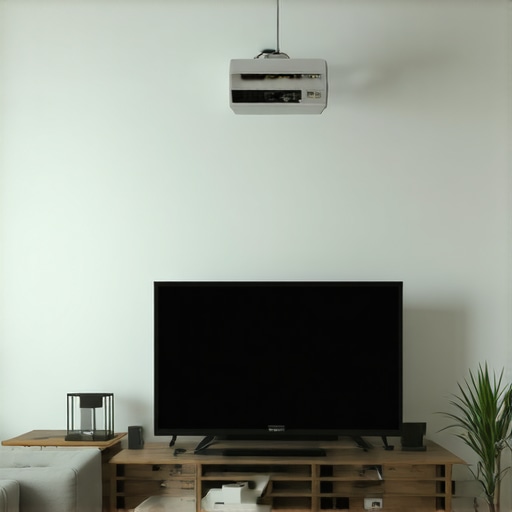
My Journey into the Home Theater World — A Personal Tale of Two Displays
Last year, I decided it was time to upgrade my home entertainment setup. As someone who loves unwinding with a good movie, I wanted the best viewing experience possible. I was torn between choosing a high-end projector or a sleek TV, especially considering the ambient light in my living room and my budget constraints. My journey into this decision-making process turned into an exciting exploration of the evolving home theater technology.
Why Ambient Light Matters More Than You Think — My Firsthand Experience
One of the first lessons I learned was how ambient light impacts display performance. I used to think that a bright room wouldn’t matter — until I installed my first projector. I vividly remember the frustration of trying to watch a movie in daylight, with glare washing out the image. That experience pushed me to research how different displays handle ambient light. I discovered that projectors, especially those designed for ambient light environments, can perform remarkably well with the right screen and setup, while traditional TVs often struggle unless you have a dedicated dark room.
Cost-Effectiveness and Budget Considerations — What My Wallet Taught Me
Budget was a significant factor. Initially, I thought a large-screen TV would be cheaper than a projector, but after some digging into the cost comparison, I realized that high-quality projectors can be surprisingly affordable, especially when considering the size and immersive experience they offer. For my budget, a mid-range projector paired with a decent screen provided a cinematic experience without breaking the bank. Conversely, a large TV with similar size and quality would have been substantially more expensive.
Image Quality and Size — Which Display Impresses More?
When it comes to picture quality, I found that modern projectors deliver stunning resolutions comparable to high-end TVs. The key difference lies in the size and the viewing distance. I personally prefer a larger display for that theater-like feel, which projectors excel at providing. However, in well-lit rooms, TVs with high brightness and anti-reflective screens maintain clarity better. To get an idea, I checked out the ultimate guide, which highlights how ambient light handling varies across displays.
Is a Projector or TV Better for My Ambient Light Conditions?
This question kept me pondering. I realized that if my living room had a lot of windows and natural light, a high-lumen projector with an ambient light rejecting screen could be a game-changer. Conversely, if I wanted simple, fuss-free viewing with consistent quality, a modern OLED TV might be more suitable. The choice hinges on your specific ambient conditions and how much you’re willing to invest in lighting control or specialized screens. For more detailed insights, I recommend reading this comprehensive comparison.
Curious About the Future — Will Projectors or TVs Dominate in 2025?
As I continue my research, I see rapid advancements in both technologies. Projectors are becoming brighter and more affordable, while TVs are improving in brightness, contrast, and screen size options. According to experts, the lines are blurring, making it an exciting time for home theater enthusiasts. I invite you to share your experiences in the comments — have you faced similar choices?
If you’re interested in exploring your options further, check out the ultimate guide to display options, which covers everything from ambient light considerations to cost and size tips. Happy viewing!
How Can Advanced Display Technologies Enhance Your Home Theater Experience?
As an enthusiast seeking the ultimate cinematic immersion, understanding the latest display innovations is crucial. Modern projectors now incorporate laser light sources and HDR capabilities, providing brighter images with more vibrant colors, even in less-than-ideal lighting conditions. Similarly, OLED and QLED TVs have made significant strides, offering higher contrast ratios and better anti-reflective coatings that mitigate ambient light issues. These technological advancements mean you can enjoy a more consistent picture quality regardless of your room’s lighting environment.
What Are the Practical Implications of Ambient Light Rejection Screens?
Ambient light rejecting (ALR) screens are a game-changer in environments where controlling natural light isn’t feasible. These screens are designed with specialized surfaces that reflect projector light towards the viewer while absorbing or diffusing ambient light. This technology allows for vibrant, high-contrast images even during daytime or in rooms with large windows. If you are planning a dedicated home theater space, investing in an ALR screen can significantly enhance your viewing experience, making it comparable to a darkened cinema environment. For detailed comparisons, you might find this comprehensive guide helpful.
Can You Balance Cost, Size, and Quality for the Perfect Setup?
Striking the right balance between budget, screen size, and picture quality requires nuanced understanding. For larger screens, projectors generally offer better cost-efficiency, especially when aiming for a true theater-sized display. However, you should consider the total cost, including screens and mounting equipment. Conversely, high-end TVs, particularly OLED models, deliver superb image quality but at a premium price, especially for larger sizes. To navigate these trade-offs, exploring tools like the screen size and cost efficiency comparison can guide your decision-making process.
Are There Hidden Factors That Could Influence Your Display Choice?
Beyond the technical specs and costs, consider factors such as room size, viewing distance, and your daily habits. For example, if you often watch in a brightly lit room or during daytime, a projector with a high lumen output paired with an ambient light rejecting screen is invaluable. On the other hand, if you prefer quick, hassle-free setup and minimal maintenance, a modern TV might be more practical. Additionally, think about future-proofing your setup—technologies like 8K resolution and HDMI 2.1 are becoming standard. Consulting comprehensive reviews and expert opinions helps ensure your investment aligns with your long-term entertainment goals. For more insights, visit the expert comparison of display suitability.
If you’re eager to deepen your understanding or need personalized advice, I encourage you to share your questions or experiences in the comments. Also, exploring additional resources like the ultimate display options guide can provide valuable insights for your perfect setup. Happy viewing!
Beyond the Basics — Embracing the Complexity of Display Technology in My Home Theater Journey
As I immersed myself deeper into the world of home theater setups, I realized that my initial understanding of ambient light’s impact was just the tip of the iceberg. The more I explored, the more I appreciated the intricate dance between display technology, room environment, and personal preferences. For instance, I discovered that not all projectors are created equal—some utilize laser light sources that dramatically increase brightness and color fidelity, transforming the viewing experience even in less-than-ideal lighting conditions. This revelation prompted me to reconsider my earlier assumption that ambient light rejection screens alone could solve all lighting challenges, leading me to appreciate a holistic approach to optimizing my setup.
Why Do Some Displays Perform Better in Mixed Lighting? A Personal Reflection
Reflecting on my own space, I realized that certain high-end OLED TVs with anti-reflective coatings and quantum dot enhancements outperform traditional models in my bright living room. This insight was reinforced by a comprehensive review I came across in this expert comparison, which highlights how emerging display technologies are addressing ambient light issues more effectively. My experience confirms that understanding these nuances can make a tangible difference—what worked well in my darker media room doesn’t necessarily translate to a sunlit space. Personal experimentation, combined with expert guidance, has been invaluable in tailoring my setup to my unique environment.
Balancing Cost, Performance, and Future-Proofing — My Evolving Strategy
The journey also made me think about the long-term implications of my choices. Investing in a projector with HDR capabilities and high lumen output seemed daunting initially, given the higher upfront cost. However, after analyzing the comprehensive guide, I realized that the right combination of advanced features and scalability provides better value over time. Moreover, I contemplated future-proofing my setup by considering 8K resolutions and HDMI 2.1 compatibility, ensuring my system remains relevant for years to come. These decisions are complex, but I’ve learned that patience and informed research are essential in balancing budget, size, and technological advancement.
How Do You Personally Tackle the Challenge of Room-Specific Factors?
One of the most personal aspects of my journey has been adapting the setup to my room’s specific characteristics. For example, I installed blackout curtains and experimented with different screen placements to optimize the visual quality. I also adjusted my seating arrangement to find the sweet spot that maximizes immersion without sacrificing comfort. This process made me realize that each home theater is a personal ecosystem—what works perfectly for one person may not suit another. I encourage you to share your experiences in the comments; understanding how others navigate these challenges can be inspiring and educational. If you’re curious about fine-tuning your environment, exploring resources like the screen size guide can provide valuable insights.
What Are the Most Overlooked Factors That Could Influence Your Display Choice?
Beyond technical specs, I’ve learned that factors such as room acoustics, furniture placement, and even ambient noise levels significantly influence the overall viewing experience. For instance, I found that installing sound-absorbing panels enhanced not just audio quality but also my focus during intense scenes. Additionally, considering the daily habits of household members—like frequent daytime viewing or nighttime movie nights—can help tailor a setup that truly fits your lifestyle. These subtleties underscore that creating a perfect home theater isn’t just about choosing the latest tech but about crafting an environment that aligns with your personal habits and environment. For more nuanced advice, I recommend exploring the best display options for ambient light.
As I continue my exploration, I find that the journey is ongoing, filled with discoveries and adjustments. Whether you’re a seasoned enthusiast or just starting, I invite you to share your insights and questions. Remember, the key to a satisfying home theater experience lies in patience, experimentation, and a willingness to learn from both successes and setbacks. For further inspiration, don’t hesitate to browse the ultimate guide to display options. Happy viewing, and may your choices lead to countless memorable movie nights!
Leveraging High Dynamic Range and Color Technologies for Unmatched Visual Fidelity
One of the most transformative advancements in recent years has been the integration of High Dynamic Range (HDR) and expanded color gamuts into both projectors and televisions. As I delved into these features, I realized their potential to dramatically elevate image realism and vibrancy, even in challenging ambient light conditions. Modern laser projectors and OLED displays now support Dolby Vision and HDR10+, which provide deeper contrast and richer color depth, making every scene more lifelike. Implementing these technologies requires careful calibration and an understanding of their limitations, especially when ambient light is present. For example, utilizing a projector with high lumen output and an HDR-compatible screen can produce stunning results, but it demands precise room lighting control to maximize their benefits. According to industry analysis by CNET, mastering HDR in ambient light environments can be game-changing, yet it requires selecting compatible hardware and optimizing your room conditions accordingly.
Optimizing Room Acoustics to Complement Visual Enhancements
While visual quality often takes center stage, I discovered that acoustics play a crucial role in creating a truly immersive home theater experience. In my own setup, I invested in acoustic panels and tailored my room’s geometry to reduce echo and absorb unwanted noise, which significantly enhanced the clarity of dialogue and the overall sense of immersion. This synergy between audio and visual elements is vital, especially when using advanced display technologies that showcase subtle gradations of contrast and color. An environment with poor acoustics can diminish the perceived quality of even the most sophisticated display. For those interested, resources like the expert guide on display suitability emphasize the importance of a balanced acoustic design as part of holistic home theater planning.
Can You Achieve True Black Levels and High Contrast in Bright Rooms?
This question has haunted many enthusiasts, myself included, as I sought to reconcile the desire for vibrant images with ambient light challenges. The secret lies in embracing technologies like OLED and QLED, which excel at producing perfect black levels and high contrast ratios, even when the room isn’t pitch dark. Additionally, innovations such as local dimming zones in high-end LED TVs and advanced pixel control in OLEDs have been pivotal. Moreover, the development of ambient light rejecting (ALR) screens has allowed projectors to perform remarkably well in bright environments. My personal experience aligns with findings from this comprehensive guide, which highlights how combining high-brightness displays with suitable screen surfaces can yield striking images regardless of lighting conditions. The key is understanding the strengths of each technology and deploying them thoughtfully within your specific room environment.
Are There Emerging Display Technologies That Will Revolutionize Ambient Light Management?
Looking ahead, I am particularly excited about the advent of MicroLED displays, which promise unprecedented brightness, contrast, and longevity. Their self-emissive nature allows for true blacks and high luminance simultaneously, effectively managing ambient light without extensive room modifications. Additionally, innovations in quantum dot technology are enhancing color accuracy and brightness in both TVs and projectors, further mitigating ambient light issues. Industry insiders like TechRadar predict that these advancements will democratize high-quality home theater experiences, making ambient light management more seamless and less costly. As an enthusiast, I encourage you to stay informed about these developments and consider how integrating these emerging technologies could future-proof your setup.
How Can Personal Experience and Expert Advice Guide Your Investment in Ambient Light-Resistant Displays?
Navigating the rapidly evolving landscape of display technology can be daunting, but balancing personal experience with expert insights is invaluable. I found that firsthand experimentation—such as testing different projectors with various screens and lighting conditions—complements the detailed guidance available from authoritative sources. For example, consulting specialized reviews and forums helped me understand real-world performance beyond manufacturer specifications. I invite you to share your journey and questions—your insights can enrich the community’s collective knowledge. To further refine your setup, explore the ultimate guide to display options, which offers in-depth analysis of ambient light management, cost considerations, and future-proofing strategies. Remember, the art of creating a perfect home theater is an ongoing process of learning and adaptation, driven by both technological innovation and personal passion.
Things I Wish I Knew Earlier (or You Might Find Surprising)
Maximize Your Space, Not Just Your Screen
I used to think that the biggest screen was the key to a cinematic experience, but I learned that room size and seating distance are equally crucial. Small adjustments in seating placement can dramatically improve picture quality and immersion, saving me money and effort.
Ambient Light Is More Than a Nuisance
Initially, I thought ambient light was unavoidable, but I discovered that choosing the right display technology and environment modifications can make a huge difference. For example, investing in ambient light rejecting screens transformed my daytime viewing experience.
Budgeting for Future Tech Pays Off
Spending a little extra on HDR-capable projectors and TVs has paid dividends. I wish I had prioritized future-proof features earlier, as they keep my system relevant and enjoyable longer.
Acoustics Are the Unsung Heroes
Clear audio complements visual quality perfectly. I underestimated how much room acoustics influence the overall experience until I added acoustic panels, which made dialogue and effects pop in a way I never expected.
Personal Preferences Matter Most
At the end of the day, personal preferences—like screen size, ambient light handling, and setup convenience—should guide your choices more than trends or reviews. Tailor your setup to what makes you feel most immersed and comfortable.
Resources I’ve Come to Trust Over Time
- Ultimate Home Displays: A comprehensive resource that helped me understand the nuances of display technologies and ambient light management. It’s my go-to for in-depth, practical advice.
- CNET Technology Reviews: Known for their detailed and trustworthy tech reviews, they kept me updated on the latest advancements in HDR, laser projectors, and OLED TVs.
- AVS Forum: An active community of home theater enthusiasts sharing real-world experiences and DIY tips that enriched my understanding beyond commercial specs.
Parting Thoughts from My Perspective
Reflecting on my journey into the world of home theater, I realize that the most important lesson is to stay flexible and prioritize what truly enhances your personal experience. Ambient light, display technology, and room acoustics all play vital roles, but ultimately, creating a space that feels right for you makes all the difference. If this resonates with you, I’d love to hear your thoughts or experiences. Sharing our stories can inspire others and lead to better setups for everyone. Feel free to drop a comment or explore more about ambient light and display options on this guide. Happy viewing!
Reading about your home theater journey resonates with my own experience. I was initially torn between a large OLED TV and a high-end projector, especially considering ambient light. I found that investing in a good ambient light rejecting screen for my projector made a world of difference, allowing me to enjoy daytime movies without washing out the image. However, I also learned that room acoustics significantly impact the overall experience. I added some acoustic panels, which enhanced detail and immersion tremendously. It’s fascinating how these technical aspects interplay with personal environment adjustments. For those grappling with ambient light in their space, would you recommend starting with a high-lumen projector paired with an ALR screen or considering a modern high-brightness TV for simplicity? I’d love to hear different perspectives on balancing performance and ease of setup.
Your detailed journey really echoes my own experience when I was trying to choose between a projector and a TV for my living room. I was initially leaning toward a large OLED TV for convenience, but after reading up on ambient light considerations and the latest in ALR screen technology, I decided to go with a high-lumen projector paired with a quality ALR screen. The results have been impressive, especially during daylight hours. One thing I found helpful was experimenting with different room lighting setups and furniture placement to optimize the viewing experience. It seems that the combination of ambient light control and display tech is crucial to achieving that cinematic feel. I’m curious—how do others manage room lighting when using a projector, especially if they lack the space for dedicated blackout curtains? Do you think investing in better window treatments or smart lighting solutions offers a noticeable benefit? I’d love to hear different approaches from fellow enthusiasts.
Reading about your experience with ambient light impact really resonated with my own journey in setting up a home theater. I also initially underestimated how much ambient light can wash out an image, especially in living rooms with large windows. What truly made a difference for me was investing in an ambient light rejecting (ALR) screen combined with a high-brightness projector. It’s remarkable how much of a difference these technologies make, and it allows for daytime viewing without sacrificing picture quality. I’ve also found that controlling natural light with smart window solutions or blackout curtains can be a game-changer, especially if you want a more consistent experience. How have others managed their room lighting when using projectors in spaces that aren’t fully darkened? Do you think smart lighting control could be the key to balancing ambient light and picture quality in multi-purpose rooms? I’d love to hear your thoughts or additional tips for optimizing setup in less ideal lighting conditions.