
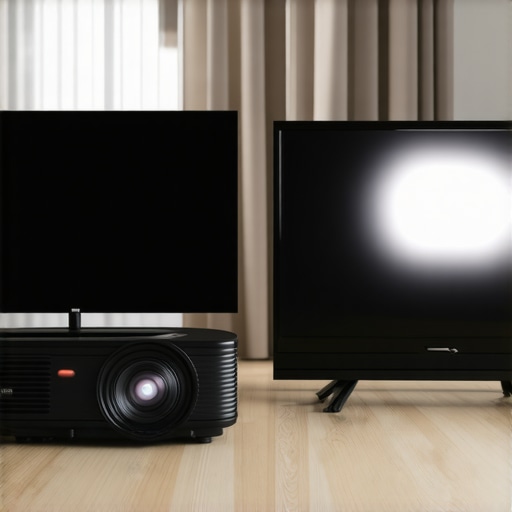
Discovering the Perfect Home Display: My Journey Begins
As someone passionate about creating the ideal home theater experience, I remember when I first debated between a projector and a TV. My living room, filled with ambient light, posed a unique challenge. I wanted a display that could handle the natural daylight while fitting comfortably within my budget. This personal quest led me to explore the nuances of each option, and I’d love to share my insights to help you navigate this decision.
Why Ambient Light Matters When Choosing Your Display
Living in a bright, sunny home, I quickly realized that ambient light was a formidable foe for traditional TVs. I found that projectors are often better suited for ambient light conditions thanks to their larger screens and better contrast management. This was a game-changer for me, especially when I wanted movie nights without blackout curtains.
Projector or TV – Which Fits My Budget?
Budget was a major concern. Initially, I thought projectors would be more expensive, but after comparing costs through resources like cost comparison guides, I found that high-quality projectors can be surprisingly affordable, especially considering the size and cinematic experience they offer. Conversely, premium TVs with advanced HDR and anti-reflective coatings come with a hefty price tag.
Managing Ambient Light: My Practical Tips
To optimize my viewing, I experimented with different projector screens and placement strategies. I learned that choosing the right screen material and setup can mitigate ambient light interference. For example, I found that matte screens reduce glare effectively, which was crucial in my living room. For further reading, I checked out expert tips on ambient light management.
Is the Bigger Screen Really Better for My Viewing Experience?
This was a question I grappled with. Larger screens do enhance immersion but also require more space and often a higher budget. I leaned towards a screen size that balanced my room dimensions and budget, guided by resources like screen size selection guides. Ultimately, I found that a medium to large display offers the best compromise for most home setups.
If you’re contemplating your own setup, I encourage you to weigh both ambient light compatibility and budget constraints carefully. Feel free to share your experiences or ask questions below—I’d love to hear how you’re planning your perfect home theater!
Remember, making an informed choice is key. For a detailed comparison, you might want to visit the ultimate guide to home theater display options.
How Can Advanced Display Technologies Enhance Your Home Theater Experience?
As home theater enthusiasts seek to elevate their viewing, understanding the latest display technologies becomes crucial. OLED and QLED screens, for instance, offer stunning contrast ratios and vibrant colors that can transform your space. OLED panels provide perfect black levels and wide viewing angles, making them ideal for dark rooms where cinematic immersion is essential. On the other hand, QLEDs excel in brightness and color volume, which can be advantageous in rooms with abundant ambient light. Combining these technologies with high dynamic range (HDR) content further enhances picture quality, delivering lifelike images that captivate viewers. When considering these options, it’s important to evaluate your room’s lighting conditions, viewing distance, and budget. To explore the best display technology for your setup, visit our comprehensive guide on display options for ambient light conditions.
What Are the Practical Considerations for Integrating Sound and Visuals Seamlessly?
While the focus often lies on visual quality, integrating high-quality audio is equally vital for an immersive home theater. Experts recommend aligning your display with a surround sound system that complements the visuals without overwhelming the room. Soundbars with Dolby Atmos support or traditional multi-speaker setups can create a theater-like atmosphere. Additionally, proper room acoustics, such as acoustic panels or strategic furniture placement, can significantly improve sound clarity and reduce echo. Achieving harmony between visuals and audio requires thoughtful planning—consider the placement of speakers relative to your display and seating arrangement. For detailed insights on optimizing your room acoustics and ensuring seamless integration, check out our article on integrating audio-visual systems.
How Can Smart Technology and Automation Elevate Your Home Theater?
Modern home theaters benefit from smart technology that simplifies control and customization. Using home automation systems, you can program lighting, screen, and sound adjustments to activate with a single command or at scheduled times. Voice-controlled assistants like Alexa or Google Assistant enable hands-free operation, enhancing convenience. Furthermore, smart displays and streaming devices allow access to a vast library of content, personalized to your preferences. Investing in a centralized control system ensures that all components—projector or TV, speakers, lighting—work harmoniously, creating an effortless cinematic experience. For practical tips on implementing smart home solutions, visit our guide on smart automation integration.
What Are the Emerging Trends in Home Theater Display Technology?
Looking ahead, innovations like MicroLED displays promise to revolutionize home theaters with their exceptional brightness, contrast, and lifespan. These displays combine the best features of OLED and QLED, providing vivid visuals even in well-lit rooms. Additionally, ultra-short-throw projectors are gaining popularity, allowing large screens in small spaces without complex installation. As content quality continues to improve, with 8K streaming and immersive VR options, staying informed about these trends ensures your setup remains cutting-edge. For insights into future-proofing your home theater, explore our article on future display technologies.
If you’re interested in more expert advice on customizing your home theater, share your questions or experiences below. For detailed comparisons and personalized recommendations, don’t hesitate to reach out through our contact page.
My Evolving Perspective on Display Technologies: Beyond the Basics
As I immersed myself deeper into the world of home theater, I realized that understanding emerging display technologies like MicroLED and OLED isn’t just about the specs but about how these innovations can transform our viewing experiences. I vividly recall upgrading my setup, and with each step, I found new nuances—such as the importance of viewing angles and color accuracy—that shaped my choices. Exploring these aspects personally has led me to appreciate that the perfect display isn’t a one-size-fits-all but a carefully curated experience tailored to your specific space and preferences.
The Nuances of Room Acoustics and Visual Harmony
While visuals often steal the spotlight, I’ve come to appreciate the subtle art of optimizing room acoustics. Small adjustments—like placing acoustic panels or choosing furniture with sound-absorptive qualities—have dramatically improved my listening experience. Achieving harmony between sound and visuals is, in my experience, an ongoing journey. It’s about creating an environment where every element complements the other, much like a symphony where each instrument plays its part flawlessly. For those seeking perfection, I recommend delving into the detailed insights offered in our article on integrating audio-visual systems.
Smart Technologies: Personalizing and Simplifying Your Home Theater
In my quest for seamless entertainment, smart automation has been a game-changer. I’ve experimented with voice commands, automated lighting, and centralized control systems, which have made my movie nights effortlessly immersive. The ability to customize scenes—dim the lights, lower the screen, and activate surround sound—all with a single command—feels almost magical. I find that investing in these technologies not only elevates the experience but also makes the setup more intuitive over time. If you’re curious about integrating smart solutions, explore our guide on smart automation for practical tips.
Future-Proofing Your Home Theater: Trends to Watch
Looking ahead, I’m excited about the potential of MicroLED displays, which promise stunning visuals in all lighting conditions and longer lifespan—an aspect I find crucial for long-term investments. Additionally, ultra-short-throw projectors continue to impress me with their ability to deliver large images in small spaces, a perfect solution for those with limited room. The evolution of content, from 8K streaming to immersive VR, signals a future where our home theaters will become even more dynamic and engaging. Staying informed is key; I recommend exploring the latest in future display technologies to keep your setup cutting-edge.
Invitation to Share and Explore
As I continue to refine my home theater environment, I invite you to share your experiences, questions, or insights. Whether you’re considering upgrading your display or integrating new technologies, your journey is uniquely yours. Feel free to comment below or reach out via our contact page. Remember, the pursuit of the perfect home theater is a personal adventure—one filled with discovery, experimentation, and ultimately, enjoyment.
What Are the Hidden Perks of MicroLED and OLED Beyond the Basics?
As my journey into high-end home theater setups deepened, I discovered that the true magic of display technology lies not only in striking contrast ratios or vibrant colors but also in their long-term reliability and seamless integration with smart ecosystems. MicroLED, for instance, promises not just stunning brightness and longevity but also remarkable energy efficiency, which is often overlooked. According to a recent review by TechRadar, MicroLED displays could redefine our expectations for durability and environmental sustainability in home entertainment. This understanding prompted me to consider not just the immediate visual benefits but also the sustainability and maintenance aspects of my investments.
How Do Room Acoustics and Visual Fidelity Interact in a Sophisticated Setup?
In my experience, achieving harmony between sound and visuals is akin to composing a symphony—each element must be meticulously tuned. Small adjustments, such as installing acoustic panels with specific absorption coefficients or choosing furnishings that diffuse sound without deadening the room, significantly enhance clarity. I found that my visual choices, like high-end OLEDs, demanded equally precise acoustics to truly shine. Integrating these systems becomes a philosophical pursuit of balance; for instance, I explored expert room acoustics strategies that transformed my space into a sanctuary of sensory harmony. This ongoing process has deepened my appreciation for the nuanced art of AV engineering, revealing that perfection is often in the details.
What Are the Frontier Technologies Reshaping Home Theater Automation?
Modern automation transcends simple remote control; it’s about creating an intelligent environment that adapts to your viewing habits. I’ve integrated voice assistants like Google Assistant and Alexa to manage lighting, screen positioning, and even ambient temperature, all synchronized for an immersive experience. The latest trend I find particularly exciting is the development of AI-driven scene customization, which learns your preferences over time. For instance, my setup now automatically dims the lights, adjusts the screen tilt, and activates surround sound when I start a movie—an elegant orchestration that feels almost intuitive. For a deeper dive into smart home innovations, I recommend exploring CNET’s smart home automation insights. These advancements not only elevate the entertainment experience but also streamline daily routines, making my home theater a true reflection of my personal style and technology savvy.
How Should Future-Proofing Influence My Choice of Display and System Components?
Future-proofing is a strategic mindset that involves balancing current needs with anticipated technological advances. I’ve learned that investing in high-quality, adaptable components—like HDMI 2.1-compatible projectors and TVs capable of 8K resolution—can significantly extend the lifespan of my setup. MicroLED’s promise of longer lifespan and better performance across lighting conditions, as highlighted in a comprehensive analysis by TechRadar, reassures me that my investment remains relevant for years to come. Additionally, choosing modular and upgradeable systems allows me to incorporate emerging technologies like immersive VR content and higher frame rates without a complete overhaul. Staying informed about industry trends through trusted sources ensures that my home theater remains at the cutting edge, blending innovation with durability seamlessly.
If you’re eager to elevate your setup with these advanced insights or want personalized advice based on your unique space, I invite you to share your questions or experiences below. Your journey toward a sophisticated home theater is a continuous adventure, and I’m here to help you navigate it with confidence.
Things I Wish I Knew Earlier (or You Might Find Surprising)
The Real Cost of Quality
When I first started exploring home theater options, I underestimated how much the quality of display technology could influence my overall experience. It’s not just about the initial price but also about long-term reliability and maintenance costs. Investing in a durable OLED or MicroLED display, for example, proved to be more cost-effective for me in the long run, especially considering their lifespan and energy efficiency. For those curious about costs, I found cost comparison guides incredibly helpful in making informed decisions.
Ambient Light Is a Game Changer
I used to think that a dark room was essential for a great viewing experience, but I was surprised to learn that certain display technologies and screens are designed to perform well even in brighter environments. My experience with matte screens and high-contrast projectors showed me that ambient light management is often overlooked but crucial. Reading expert tips, like those in ambient light management articles, changed my perspective entirely.
Size Matters More Than I Expected
Choosing the right screen size was more nuanced than I initially thought. Bigger isn’t always better if it doesn’t fit your space or budget. I learned that a medium to large screen, roughly based on my viewing distance, provided the best immersive experience without overwhelming the room. For guidance, I checked out screen size selection guides and found them invaluable.
Smart Tech Can Be a Huge Time Saver
Integrating smart technology and automation transformed my home theater setup. Voice commands, automated lighting, and centralized controls made my movie nights effortless. I realized that a bit of initial setup pays off by creating an intuitive environment where everything works seamlessly together. If you’re interested, I recommend exploring smart automation resources to get started.
Emerging Technologies Are Worth Watching
The future of home theater is exciting, with MicroLED and ultra-short-throw projectors leading the way. These innovations promise brighter, more vibrant images and flexible installation options. Staying informed about trends through trusted sources like TechRadar helped me plan for future upgrades and ensured I invested wisely.
Resources I’ve Come to Trust Over Time
- TechRadar: Their reviews on MicroLED and OLED technologies are thorough and up-to-date, helping me understand the real-world benefits of each.
- AVS Forum: A community-driven site where enthusiasts share detailed room acoustics tips and setup stories that inspired my own adjustments.
- Home Theater Review: Offers comprehensive guides and expert opinions on the latest in display and audio technology, which I found invaluable for making choices.
Parting Thoughts from My Perspective
Building the perfect home theater is a journey filled with learning and experimentation. From understanding ambient light’s impact to exploring cutting-edge display tech, I’ve realized that the best setup aligns with your personal space, preferences, and future plans. The key takeaway? Stay curious, do thorough research, and don’t be afraid to invest in quality and smart solutions that enhance your viewing experience. If this resonated with you, I’d love to hear your thoughts or experiences. Feel free to share or ask questions—I’m here to help you craft your ideal home theater environment.