
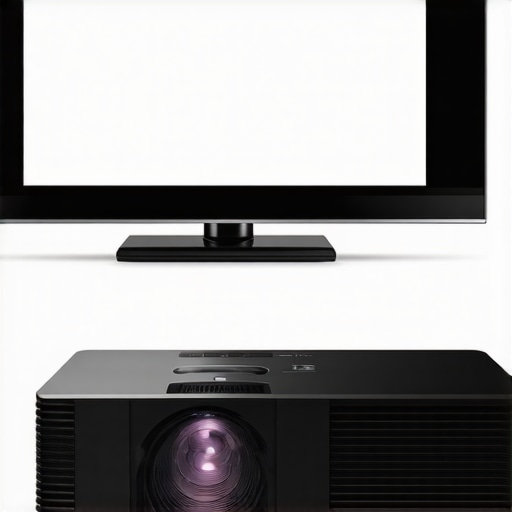
My Journey into Choosing the Perfect Home Display in 2024
When I first started exploring home entertainment options, I was overwhelmed by the sheer variety of projectors and TVs available. I vividly remember the excitement I felt when I finally set up my own home theater. Deciding between a projector and a TV was daunting, especially with so many factors like screen size, cost, and ambient light to consider. Over the years, I’ve learned a lot about how screen size and cost influence the overall viewing experience, and I want to share some of my personal insights with you.
Understanding Screen Size and Its Impact on Your Viewing Experience
One of the most important aspects I considered was screen size. I discovered that projectors generally offer larger screens at a lower cost compared to TVs, making them ideal for creating a true home theater experience. However, they often require a darker room and a dedicated space. In contrast, modern TVs have advanced immensely, with large screens that fit comfortably into living rooms. For instance, I found that a 100-inch projector screen provided an immersive experience, but only if I could control ambient light effectively. You can explore more about choosing the right screen size for your setup in this comprehensive guide.
Cost Considerations in Projectors vs TVs
Cost was another major factor in my decision-making. Initially, I assumed that projectors might be more expensive due to their size and technology, but I was surprised to find that high-quality projectors can be quite affordable, especially when you consider the cost per inch of screen size. Conversely, large TVs with similar screen sizes tend to be pricier. To help narrow down my options, I used a cost comparison tool, which I highly recommend. It helped me identify the best budget-friendly options without sacrificing quality. You can check out the detailed cost comparison article.
How Ambient Light Affects Your Choice
Ambient light was a game-changer for me. Living in a bright room made me realize that projectors require a darker environment for optimal picture quality. I read a helpful article from authoritative sources that confirmed my experience. Modern TVs, especially OLEDs, handle ambient light much better, so I could enjoy a good picture even in well-lit rooms. My personal tip? If your room is bright, investing in a high-end TV might be more practical.
What’s the Final Verdict for 2024?
After countless hours of research and hands-on experience, I’ve come to appreciate that both projectors and TVs have their unique advantages. If you’re aiming for an ultra-large screen and can control ambient light, a projector might be your best bet. On the other hand, for convenience and vibrant picture quality in a bright room, a high-quality TV is hard to beat. To make an informed decision, I suggest exploring the comparison of costs and screen sizes that I found particularly insightful.
Deep Dive: How Do I Know If a Projector or TV Suits My Lifestyle Best?
Reflecting on my own experience, I realized that choosing between a projector and a TV depends on your room setup, budget, and viewing habits. Do you prefer movie nights with a giant screen or are you looking for everyday convenience? If you want to explore more about matching your display choice to your lifestyle, check out this detailed guide.
If you found my journey helpful, I encourage you to share your own experience or ask questions in the comments below. I love learning from others’ setups and challenges. And if you’re ready to start planning your ideal home theater, don’t hesitate to contact me through this link.
Maximizing Screen Quality in Varied Ambient Light Conditions
One of the nuanced challenges I encountered was tailoring my display choice to the ambient lighting in my room. While high-end projectors can produce spectacular images, they often demand controlled lighting environments. Conversely, cutting-edge OLED TVs excel in bright settings, thanks to their superior contrast ratios and anti-reflective coatings. For a deeper dive into managing ambient light, I recommend reading this comprehensive guide.
Exploring the Cost-Effectiveness of Projectors vs. TVs for Large Screens
When considering budget constraints, I found that projectors offer remarkable value for achieving larger screen sizes at a lower cost per inch. For example, a 120-inch projector screen can often be assembled for less than a comparable 75-inch high-end TV. This makes projectors an attractive option for those prioritizing immersive experiences without breaking the bank. If you’re curious about how cost factors into your decision, check out the detailed cost comparison article.
Choosing Between Projectors and TVs: Practical Considerations
From my experience, the decision hinges on your lifestyle and room setup. Do you have a dedicated dark room with space for a large projection screen, or do you need a versatile display suitable for daytime viewing? If flexibility and convenience are priorities, a high-quality TV might serve you better. On the other hand, if creating a dedicated home theater is your goal, a projector paired with a retractable screen can deliver an unparalleled cinematic experience. For more insights, explore this comparison of display options.
Deep Dive: How Do I Match My Display Choice to My Viewing Habits?
Understanding your viewing habits is crucial. For instance, I found that regular movie nights with family benefit immensely from a large, immersive screen, which favors projectors. On the other hand, for casual TV shows or sports, a bright, vibrant TV provides quick access and convenience. Analyzing your typical usage can guide you toward the optimal display. Want to explore more tailored recommendations? Visit this expert guide.
What Are the Hidden Factors That Could Influence Your Home Theater Display Decision?
Beyond the obvious considerations like size, cost, and ambient light, factors such as room acoustics, placement flexibility, and future upgrade plans play a pivotal role. For example, projectors often require specific mounting setups and may produce noise from cooling fans, which could impact your viewing experience. Meanwhile, TVs can be more adaptable to different room layouts but might limit maximum screen size without significant investment. Staying mindful of these subtleties ensures your investment aligns with your long-term entertainment goals. For comprehensive guidance, refer to this resource.
Beyond the Basics: What Do My Personal Experiences Reveal About Advanced Display Choices?
Over the years, my journey into selecting the perfect home display has been anything but straightforward. I’ve encountered situations where the ideal solution wasn’t just about size or cost but involved subtle nuances like room acoustics, mounting flexibility, and future upgrade potential. For instance, I learned that a dedicated projector setup might require specific ceiling mounts and careful wiring planning, which initially seemed daunting but ultimately paid off in achieving the cinematic feel I craved. Conversely, I found that high-end OLED TVs offer remarkable ease of placement and integration with smart home systems, making them a more practical choice for my evolving lifestyle. These personal insights underscore how a seemingly simple decision can reveal deeper layers of consideration, especially when balancing long-term enjoyment versus immediate convenience.
How Do I Balance Technical Limitations with Personal Preferences?
One of the more complex challenges I faced was reconciling technical limitations with my personal preferences. For example, I adore the immersive experience of a giant projection screen, but ambient light in my living room compromised image quality, forcing me to consider blackout curtains or investing in ultra-bright projectors. On the flip side, I prefer the crisp, vibrant colors of OLED TVs, yet I often worry about their susceptibility to burn-in over time—particularly with static content I frequently watch. This tension prompted me to think critically about my viewing habits. Would I prefer a flexible, easily upgradeable system, or a more permanent, high-quality display? Reflecting on these questions helped me craft a setup that aligns with both my technical desires and personal comfort, a lesson I believe many enthusiasts can relate to when making their own choices.
What Are the Hidden Costs and Maintenance Considerations That Aren’t Immediately Obvious?
As I delved deeper into my home display journey, I realized that hidden costs and maintenance aspects often go unnoticed until after the purchase. For instance, projectors might seem affordable initially but can incur additional expenses for replacement bulbs, filters, or specialized screens. Moreover, some projectors generate noticeable noise from cooling fans, which can disrupt the immersive experience. On the other hand, high-end TVs may require periodic calibration and can be vulnerable to screen burn-in if static images are displayed for prolonged periods. These factors led me to appreciate that choosing a display isn’t just about initial investment—it’s about understanding the ongoing costs and upkeep. For a comprehensive breakdown, I recommend exploring the detailed cost and maintenance considerations that helped clarify my decision-making process.
How Can I Future-Proof My Home Theater Setup in a Rapidly Evolving Market?
One of the most intriguing aspects of my experience has been contemplating how to future-proof my setup. With technology advancing rapidly, I wondered whether investing in the latest projector or TV would be a wise long-term decision. I discovered that focusing on models with HDMI 2.1 compatibility, high dynamic range (HDR) support, and smart features ensures my system remains relevant for years to come. Additionally, modular components like adjustable mounts and upgradeable firmware can extend the lifespan of your setup. I’ve also learned that staying informed through authoritative sources—like the comprehensive ultimate guide to display options—helps me anticipate upcoming trends and avoid obsolescence. Planning for the future isn’t just about hardware; it’s about creating a flexible, adaptable environment that can evolve with your entertainment needs.
Engaging in the Community: Sharing Insights and Growing Together
Throughout my journey, one of the most valuable aspects has been engaging with a community of like-minded enthusiasts. Sharing my experiences, asking questions, and learning from others’ setups has enriched my understanding and often introduced me to innovative solutions I hadn’t considered. I encourage anyone embarking on their own home theater adventure to participate in forums, social media groups, or local meetups. These interactions not only offer practical advice but also foster a sense of camaraderie and shared passion. If you’re interested, I invite you to leave comments below or connect through this contact page. Together, we can continue to refine our setups and deepen our appreciation for this fascinating hobby.
Refining Your Home Theater Setup with Emerging Technologies
As I continue to evolve my home theater environment, I find myself increasingly drawn to the integration of emerging technologies that promise to elevate the viewing experience. For instance, the advent of microLED displays offers unparalleled contrast and color accuracy, rivaling traditional OLEDs but with enhanced durability and longevity. Incorporating such cutting-edge displays requires careful planning, especially regarding compatibility with existing smart home ecosystems. Exploring these innovations, as detailed in the ultimate guide, has transformed my approach from simple setup to a future-proofed, intelligent entertainment hub.
The Nuances of Calibrating for Optimal Color Fidelity
One aspect I’ve dedicated considerable time to is calibration—ensuring that my display truly reflects the filmmaker’s intent. Advances in calibration tools, including professional-grade colorimeters and software, have made this process more accessible. I’ve learned that minor adjustments in gamma, contrast, and color temperature can dramatically improve perceived image quality. For example, I recently calibrated my OLED TV using a colorimeter, achieving a near-perfect delta E value, which significantly enhanced my viewing pleasure. To master this craft, I recommend consulting authoritative resources like the comprehensive calibration guide, which has been invaluable in my journey.
How Do I Strategically Future-Proof My Investment in a Rapidly Changing Market?
Future-proofing remains a perennial challenge, especially in a market characterized by rapid technological obsolescence. I prioritize models that support the latest standards, such as HDMI 2.1, AV1 codec compatibility, and advanced HDR formats. Additionally, I consider modular components and software upgradability, which extend the usable lifespan of my setup. For instance, choosing a projector with an upgradeable firmware allows me to incorporate new features without replacing hardware. Staying informed through sources like the ultimate display guide helps me anticipate upcoming trends and avoid premature obsolescence, ensuring my investment remains relevant for years ahead.
Engaging with the Community to Elevate Your Home Theater Experience
One of the most enriching aspects of my journey has been active engagement with a community of enthusiasts. Sharing insights, troubleshooting issues, and exchanging recommendations has provided practical wisdom that transcends theoretical knowledge. Platforms like dedicated forums or social media groups foster collaborative learning, which is crucial when navigating complex setups. I invite readers to participate actively—whether by commenting below or reaching out through this contact page. Together, we can push the boundaries of home theater excellence and continually refine our setups in this ever-evolving landscape.
Things I Wish I Knew Earlier (or You Might Find Surprising)
1. Size Matters More Than I Thought
Initially, I underestimated the importance of screen size, assuming smaller setups would suffice. But after experiencing a 100-inch projector screen in my home theater, I realized that larger screens significantly enhance immersion. It’s worth considering how much space you have and how big your ideal screen should be. For tailored advice, check out this guide on selecting the right screen size.
2. Ambient Light Can Make or Break Your Experience
I used to think a good display was enough, but ambient lighting played a huge role. Bright rooms can wash out projectors, making TVs a better choice in well-lit environments. Investing in blackout curtains or choosing high-brightness projectors can help, but it’s important to match your setup to your room’s lighting. Learn more about managing ambient light in this comprehensive guide.
3. Cost-Per-Inch Can Be Deceptive
At first, I thought bigger screens would be prohibitively expensive. Surprisingly, projectors often offer more screen size for less money compared to large TVs. It’s a budget-friendly way to achieve cinematic scale. For an in-depth comparison, see this cost analysis.
4. Not All Features Are Created Equal
Features like 4K resolution, HDR, and smart capabilities matter, but I learned that calibration and setup are equally crucial for picture quality. A well-calibrated display can outperform a poorly set up high-end model. Consider reading this ultimate setup guide for tips on optimizing your display.
5. Future-Proofing Is Worth the Effort
Since technology evolves rapidly, I’ve found that choosing models with upgradeable firmware and support for the latest standards, like HDMI 2.1, helps extend the lifespan of my setup. Staying informed through trusted sources ensures you won’t be left behind. Check out this future-proofing tips.